


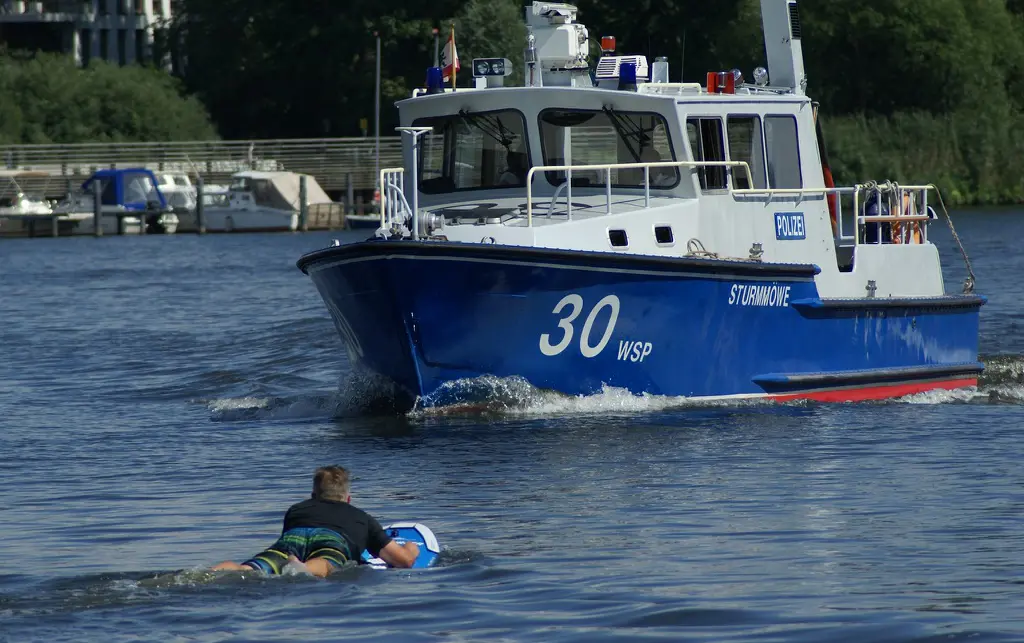
eFoils in the UK: yes, they're legal — but the answer is all about local rules. There is no national licence, registration or number plate for eFoils in Britain; what matters is who controls the water. We explain the current legal picture — from eFoil experts since 2017.
By Andreas Lakeberg — E-SURFER founder, eFoil expert since 2017 and board member of the Global Foil Board Sports Association (GFA)
Last updated: July 2026
Are eFoils legal in the UK? Yes. There is no national law that licenses, registers or bans eFoils, and you do not need a boat licence to ride one. What decides where you can actually go is local: council and harbour byelaws at the coast, and waterway operators inland — the Canal & River Trust and the Environment Agency (River Thames) require a licence or registration for powered craft. Insurance is not required nationally, but operators often demand it.
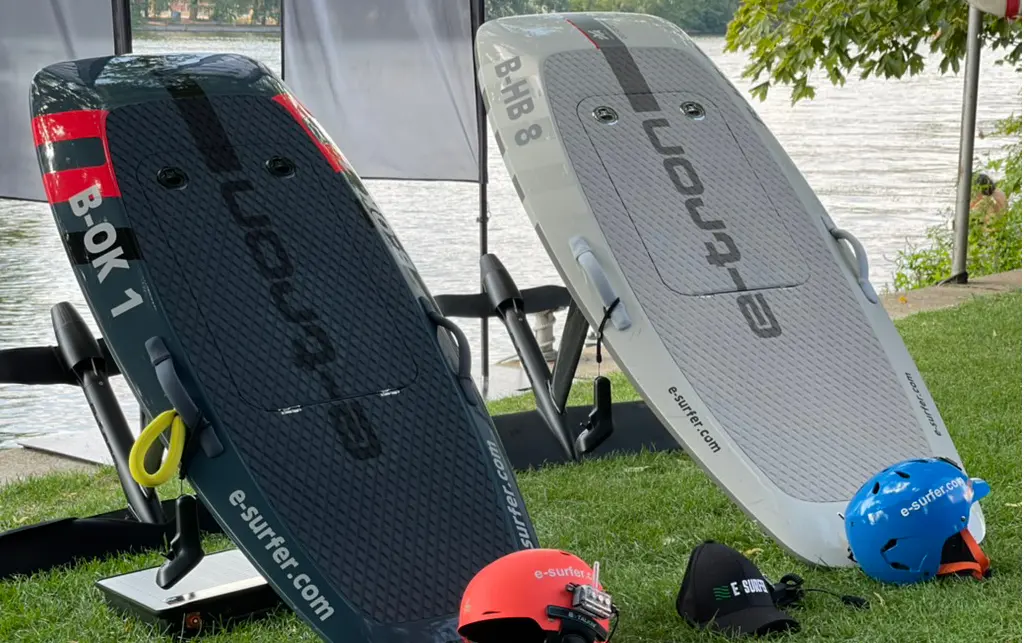
eFoils in the UK: what the law actually says
Yes, eFoils are legal to own and ride in the UK, and there is no eFoil-specific national law. Unlike Germany or France, Britain has no national register or number plate for small recreational craft: the RYA confirms there is no compulsory national boat registration, and it actively opposes introducing one. In practice that means no plate, no national permit and no government office to visit before you ride.
There is also no national licence or riding test for an eFoil. The UK relies on training and guidance rather than statutory licensing. The catch is simple: “no national rules” does not mean “no rules”. Almost everything that decides where you can ride is set locally, by whoever controls that stretch of water.
According to E-SURFER, the UK is one of Europe's more relaxed countries for owning an eFoil — but also one of the most local. Where you launch matters far more than any national rule, so we always check the byelaws and the water's owner before riding a new spot.
Why buy from E-SURFER?
Eight brands, dozens of models ridden by us. We tell you honestly which board suits you.
Do you need a licence or registration for an eFoil in the UK?
Not from central government. There is no national licence to ride an eFoil and no UK-wide registration or number plate for recreational craft. Two important exceptions apply on inland waters, however:
- Canal & River Trust waters: every boat “with or without a motor” needs a licence — a powered eFoil is covered.
- River Thames (Environment Agency): all powered boats must be registered, and registration requires at least third-party insurance.
So although there is no national eFoil licence, riding on many inland canals and rivers is licence- or registration-controlled in practice — and often discouraged because of speed limits, wake and other users.
Where can you ride an eFoil in the UK?
At the coast, the picture is set by local byelaws and harbour authorities, not a single national rule. The Crown Estate owns around half of the foreshore and most of the seabed out to 12 nautical miles; there is a public right of navigation on the water at high tide, but no automatic right to launch or land a craft. Slipways are frequently controlled — and charged for — by local councils.
Local councils and harbour masters regulate personal watercraft — the category eFoils sit closest to — through byelaws: speed limits near shore, designated zones, exclusion areas in protected sites, and sometimes minimum rider ages or required RYA qualifications. The RYA notes there is no national scheme, so you may need separate local registrations to launch in some areas.
The practical takeaway: before you ride a new spot, check the local council or harbour authority byelaws and whether the launch site allows powered craft. This is exactly where a spot map helps.
Looking for verified places to ride? The eFoil-Spot community map gathers spots checked by the community — or head straight to eFoil-Spot.com.
Are the rules different in Scotland?
Yes, in part. Scotland has its own framework for inland waters: you need a Scottish Navigation Licence to keep and use a powered boat on Scottish Canals' waterways. Coastal waters out to 12 nautical miles are managed under the Marine (Scotland) Act 2010. Scotland's well-known access rights (the “right to roam”) mainly cover land and non-motorised access, so they should not be assumed to permit motorised eFoiling everywhere — check local rules as you would in England.
Do you need insurance and safety gear for an eFoil in the UK?
Insurance is not required by national law simply to ride, but it is often mandatory in practice: the Environment Agency requires at least third-party insurance to register a powered boat on the Thames, and many harbours and clubs demand cover too. As eFoil specialists since 2017, we strongly recommend third-party liability insurance — a collision with a boat or a person can be very expensive.
There is no national statutory equipment list for eFoils either. The RYA recommends the essentials for powered watercraft: a buoyancy aid or impact vest and a kill-cord that stops the motor if you fall off. Local byelaws may add their own requirements.
eFoils in the UK vs Germany and France: the key differences
For riders comparing markets, the contrast with the Continent is clear:
- Registration / plate: none in the UK for eFoils; Germany requires a plate from 2.21 kW; France requires none (the eFoil is a PNM).
- Licence: none nationally in the UK; from 7.5 kW in Germany; from 4.5 kW in France. Popular models such as Lift Foils and Aerofoils (around 3.7 kW) stay under both Continental thresholds.
- Inland waters: in the UK, Canal & River Trust and the Thames require a licence or registration for powered craft — stricter inland than the German or French default.
- Insurance: not required by national law in the UK, France or Germany — but frequently demanded by UK operators.
- Who decides: in the UK, local councils and harbour byelaws are the real authority. Check locally, every time.
Where do eFoil rules stand across Europe?
eFoil rules vary enormously across Europe — from very relaxed to effectively banned. France treats the eFoil as its own category (PNM) with no plate, Germany requires registration above 2.21 kW, the Netherlands classes it as a “snelle motorboot” with a licence and registration, and countries like Denmark or Portugal even require a licence. Bathing-zone distances of 200–300 m and local speed limits apply almost everywhere.
For the full country-by-country picture — plates, licences, insurance and where you can actually ride — see our Europe-wide overview: Where are eFoils allowed? A country-by-country guide.
Frequently asked questions about eFoils in the UK
Are eFoils legal in the UK?
Yes. There is no national law that licenses, registers or bans eFoils, and you don't need a boat licence to ride one. Where you can ride is set locally by council and harbour byelaws, and inland waters such as Canal & River Trust canals and the River Thames require a licence or registration for powered craft.
Do I need a licence or number plate for an eFoil in the UK?
No national licence, registration or number plate exists for recreational eFoils. The main exceptions are inland: Canal & River Trust waters require a boat licence, and the River Thames requires registration for powered craft.
Where can I ride an eFoil in the UK?
At the coast under local council and harbour byelaws (speed limits, zones, launch permissions), and inland only where the waterway operator allows it. There is no automatic right to launch, so always check local rules and the launch site first.
Are the rules different in Scotland?
Partly. Scottish Canals require a Scottish Navigation Licence for powered craft, and coastal waters fall under the Marine (Scotland) Act 2010. Scotland's access rights mainly cover non-motorised use, so don't assume motorised eFoiling is allowed everywhere.
Do I need insurance for an eFoil in the UK?
Not by national law, but often in practice: third-party insurance is required to register a powered boat on the Thames and is commonly demanded by harbours and clubs. We strongly recommend third-party liability cover.
→ Explore the Lift Foils and Aerofoils eFoils in our eFoil shop.


 17 min read



