


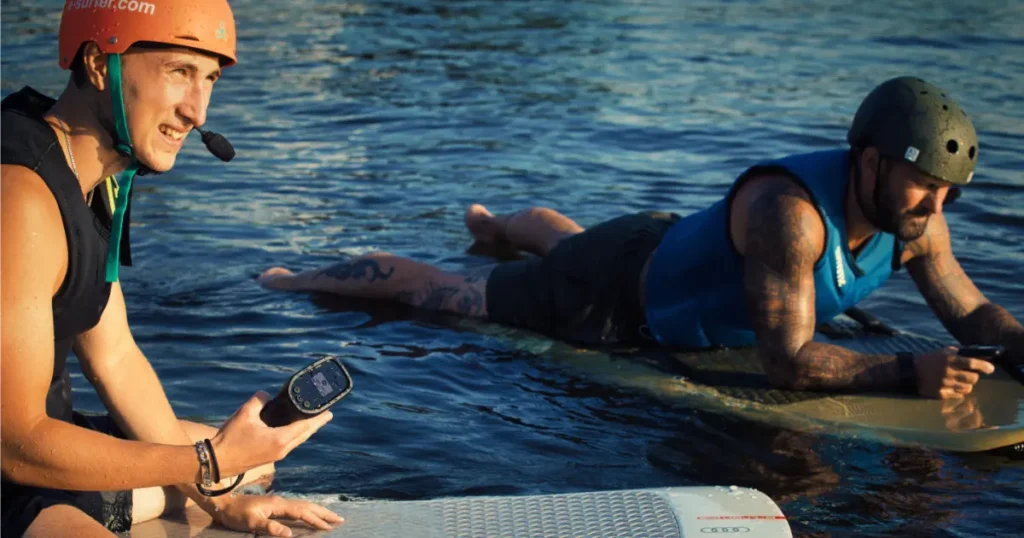
eFoil safety is no accident — it comes down to gear and behaviour. An impact vest, a helmet, the right distance and a well-maintained battery decide whether a session stays relaxed. We have been riding since 2017 — here is our complete safety guide to eFoiling.
By Andreas Lakeberg — E-SURFER founder, eFoil expert since 2017 and board member of the Global Foil Board Sports Association (GFA)
Last updated: July 2026
eFoil safety rests on three pillars: the right protective gear (impact vest, helmet and wetsuit), safe riding (keep at least 50 metres from swimmers, master the fall, control your speed) and careful handling of the lithium battery. Get these three right and you sharply reduce the risk of eFoiling.
eFoil safety: how dangerous is eFoiling really?
With the right gear and a few rules, eFoiling is a comparatively safe watersport — the biggest hazards aren't the electric motor, but the sharp foil wing, cold water and carelessness towards other water users.
A modern eFoil reaches 40 to over 50 km/h depending on the model, though in practice most riding happens between 20 and 35 km/h. At these speeds you hover on a carbon foil wing with sharp edges — the most common injuries in this sport are cuts from the foil in a fall, not motor problems.
In our testing, three risks matter: first, contact with your own foil during a fall; second, hypothermia and cold shock in open water; third, collisions with swimmers, boats or obstacles. All three can be strongly reduced with the right gear and a handful of firm rules.
A word on the drive: an eFoil is powered by a propeller, and that is the real hazard on the device. A jet drive, as used by jetboards, is significantly safer than an open propeller — so an eFoil with a propeller belongs in the hands of riders who know what they are doing, not in an unsupervised crowd. The electronics themselves work reliably: modern eFoils constantly monitor battery, temperature and motor, and throttle back automatically before anything overheats.
There is deliberately no classic kill-switch on an eFoil the way there is on a jetboard — it would only get in the way while riding. The safeguard works differently: if you fall into the water, the remote loses its radio contact with the board and the motor shuts off immediately. Even so, the decisive factor is the person — that they use the gear and know the limits of their own ability. This is exactly where eFoil safety begins: with an honest self-assessment.
According to E-SURFER, most incidents happen to beginners in the first few hours — precisely when falls are most frequent. That's why we recommend every newcomer learn to ride in a structured way rather than by feel. Just how hard the start really is, we describe in our guide is e-foiling difficult to learn.
What protective gear do you need for eFoiling?
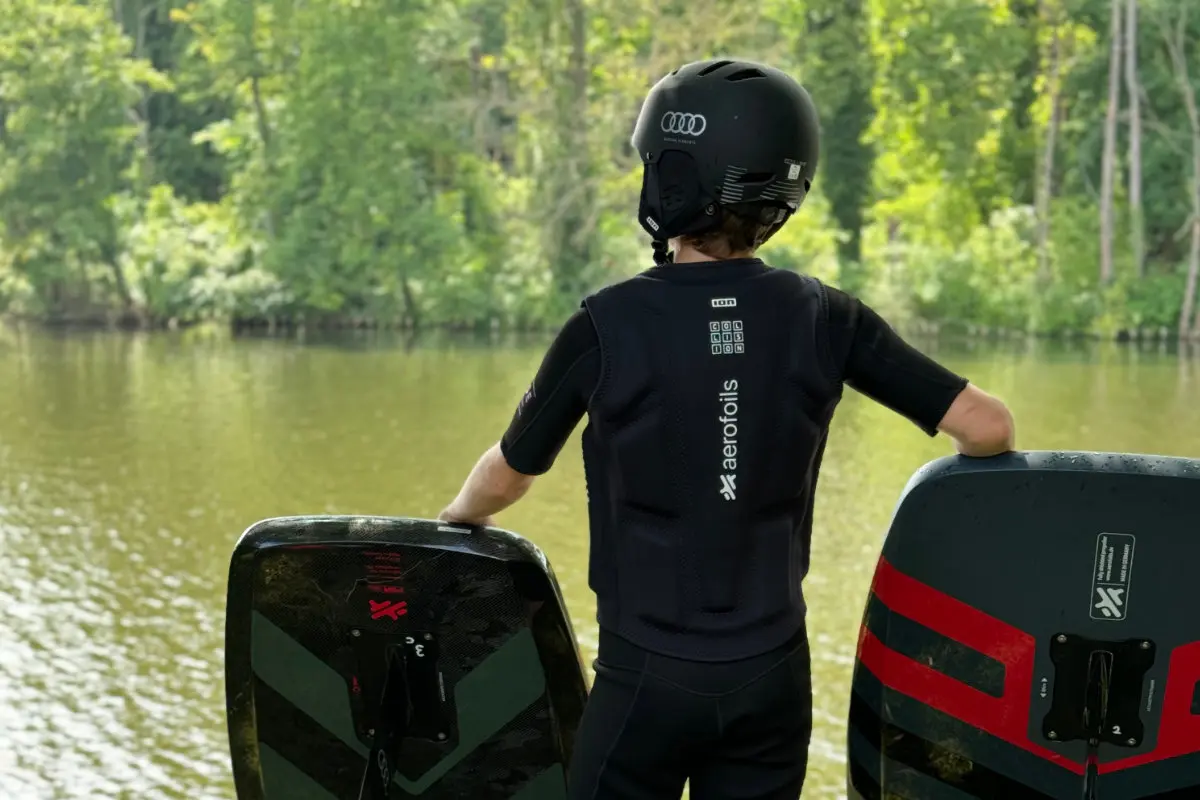
The basics are an impact vest, a helmet and a wetsuit or drysuit matched to the water temperature. These three aren't accessories — they are the foundation of every bit of eFoil safety.
- Impact vest — the single most important measure. It keeps you at the surface after a fall, even if you're briefly dazed, and cushions the impact against the board or foil. Our own foil vest is built exactly for this.
- Helmet — mandatory, not optional. A watersports helmet protects against impacts with the board or foil, which quickly come close to your head in a fall. We never ride without one and don't recommend it to anyone.
- Wetsuit or drysuit — protects against hypothermia (the most important factor in cold water) and cushions abrasions and cuts. Choose the thickness by water temperature.
- Gloves and booties — only in genuinely cold water. They don't improve the feel of riding — quite the opposite: without gloves you have more feel on the remote. In the cold, though, warmth wins out.
- Sun protection and sunglasses — UV is often underestimated on the water; sunglasses with a strap help you see.
In our tests, a vest alone isn't enough in cold water — the combination of impact vest, helmet and a warming suit decides your safety reserve when you're in the water for longer.
How do you ride an eFoil safely?
Safe eFoiling means: keep at least 50 metres from swimmers and the shore, check where the board is after a fall before anything else, and match your speed to your own ability.
Just as important is the preparation on land. Before you go into the water, briefly check the battery level and remaining range as well as the firm seating of foil and mast. Plan your run so you can comfortably get back to the start even with a half-empty battery — don't turn around only when a single bar is left. Riders who internalise this short routine avoid most of the unpleasant surprises on the water.
- Keep your distance — at least 50 metres from swimmers, bathing areas, jetties and boats. An eFoil has no business in a swimming zone.
- After a fall — you can't always steer where you fall. What matters is afterwards: don't turn back to your eFoil straight away, it could be coming towards you. Wait two or three seconds and then look for the board.
- Alone or with company — don't ride alone at unfamiliar or remote spots. Tell someone where you are and how long you'll be out.
- Weather and visibility — don't head out in thunderstorms, fog, strong wind or twilight. An offshore wind can push you away from the shore on an empty battery.
- Meter your speed — as a beginner, start slowly, build a feel lying and kneeling first, then stand up. Only as fast as you can control.
In difficult conditions, one more piece of gear comes into play: the eFoil leash, a safety line between you and the board. As soon as you're dealing with strong current, powerful wind or waves over a metre, you should wear it — it stops the board drifting away after a fall and leaving you to swim after it. In calm water, though, you deliberately leave it off: there it's more in the way than useful. Our retractable foil leash doesn't get in the way during normal riding and is made for exactly these cases.
Where you're actually allowed to ride, and whether registration or insurance is required, varies by water — we cover it in detail in our guide to the rules and licensing. The official conduct guidance for personal watercraft (RYA) and the advice on wearing a life jacket (US Coast Guard) are essential reading before you head out for the first time.
As a board member of the Global Foil Board Sports Association (GFA), we work to make safety standards and considerate behaviour on the water a matter of course. For us, eFoil safety includes both sides — your own gear and consideration for others.
How do you handle the eFoil battery safely?
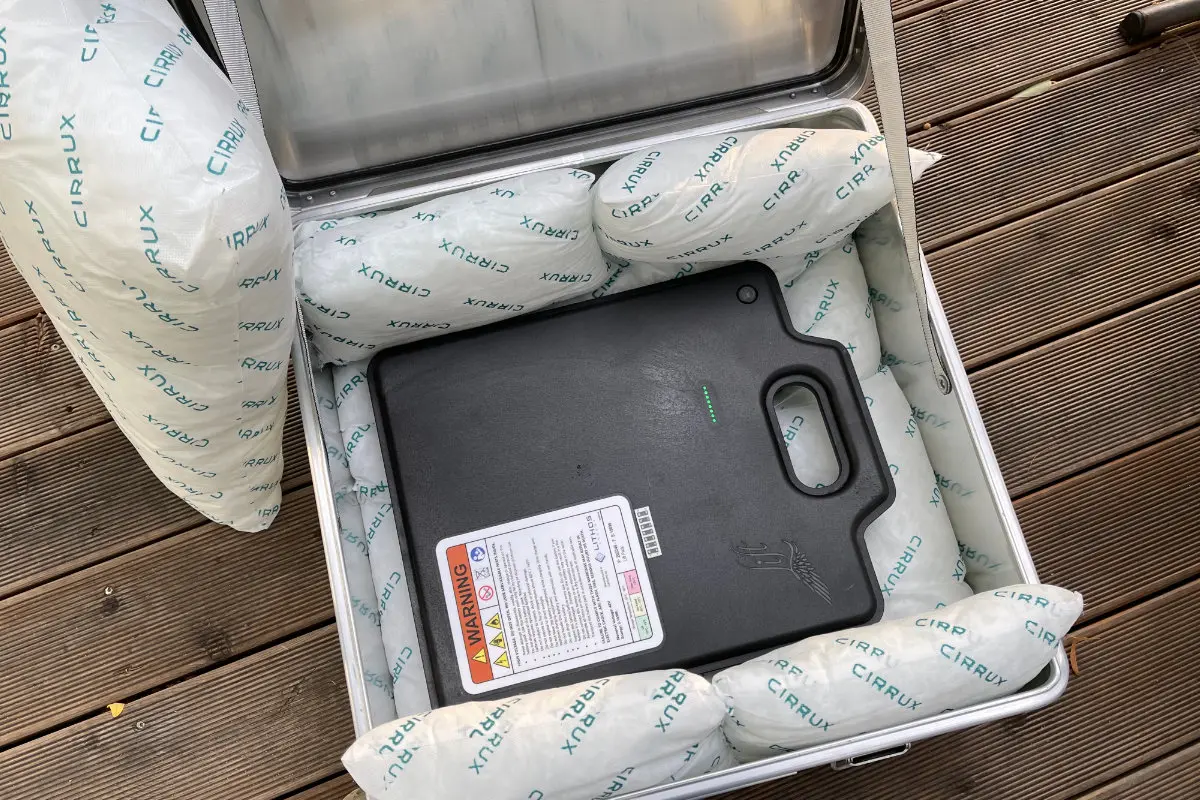
The lithium-ion battery is the most sensitive component: keep it dry, inspect it before every ride, charge it fireproof and supervised, store it at 30 to 60 percent — and take it out of service immediately at any sign of smoke, swelling or unusual heat.
The manufacturers largely agree here. Aerofoils sums it up in its battery handout: check plugs and pins for sand, corrosion and bent contacts before every ride, never throw or open the battery, charge only with the original charger and on a fireproof surface — never unattended and not in direct sun. Store at 30 to 60 percent charge, cool and dry, ideally in a fireproof eFoil battery box.
Take warning signs seriously: with cracks, swelling, smell, smoke or unusual warmth — or after a hard fall — stop using the battery, end charging immediately, move the board to a safe place outdoors and contact the manufacturer's service. In case of fire: call the emergency number, no attempts to extinguish it yourself.
Because safe storage is a topic in its own right, we've devoted two detailed guides to it: one on the safe storage of lithium-ion batteries (fireproof boxes, charging, transport) and one on how to store your eSurfboard over winter. They hold all the detail we deliberately keep short here.
Buying an eFoil? Safety is part of the advice
We've been testing all the leading eFoil models ourselves since 2017 and advise you in our Berlin showroom, by email or by phone — with eFoil safety and the right protective gear included. Which board suits you, and how the models compare on handling and safety, is in our eFoil comparison. If you'd rather browse straight away, you'll find our selection in the eFoil shop.
Frequently asked questions about eFoil safety
Is eFoiling dangerous?
With the right gear and a few rules, eFoiling is comparatively safe. The biggest injury risk doesn't come from the motor but from the sharp foil wing in a fall — an impact vest, a helmet and enough distance clearly reduce the risk.
Do you need a helmet for eFoiling?
Yes. For us the helmet is mandatory, not optional. A watersports helmet protects against impacts with the board or foil, which quickly come close to your head in a fall. We never ride without one.
Which vest do you wear for eFoiling?
An impact vest. It keeps you at the surface after a fall and cushions the impact against the board or foil at the same time. We recommend one to every rider.
Can you injure yourself on the foil?
Yes — the carbon foil wing has sharp edges. The most common injuries are cuts in falls. So after a fall don't turn back to the board immediately, and wear an impact vest, a helmet and a wetsuit.
How do you store the eFoil battery safely?
Cool, dry and at 30 to 60 percent charge, away from flammable materials, ideally in a fireproof storage box. Full details are in our guide to the safe storage of lithium-ion batteries.


 35 min read



